Building a Security-First Culture: Why People Are Your Strongest Firewall
Building a security-first culture is no longer an optional IT checkbox — it is an existential requirement for modern clinics, firms and educational institutes. Here is how human-layer threat mitigation cuts breach exposure.
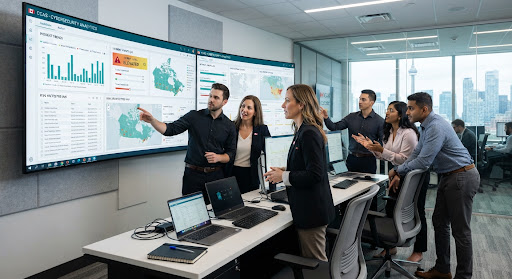
Every organisation we assess has some form of technical control in place — a firewall, an endpoint agent, a mail filter. Very few have rehearsed what happens when a member of staff is asked, convincingly, to bypass all three.
The control that fails quietly
Technical controls fail loudly. A certificate expires, a service stops, an alert fires. Human controls fail quietly: someone approves a payment, resets a password, or forwards a document, and nothing in the stack registers a problem until the consequences surface weeks later.
That asymmetry is why we treat awareness as an operational control rather than an annual compliance exercise. It needs the same things any other control needs — a baseline, a test schedule, and a metric that moves.
What a security-first culture actually looks like
- Reporting is frictionless. One button, no judgement, acknowledged every time. If reporting a suspicious email is harder than deleting it, staff will delete it.
- Scenarios are specific. Generic phishing training does not prepare a dental receptionist for a fake insurer request. Calibrate to the work people actually do.
- Leadership participates visibly. When the practice manager reports their own near-miss in a team meeting, the cost of admitting a mistake drops for everyone.
- Metrics are published. Report rate, time-to-report and repeat-click rate, shared with the team — not used against them.
Start with a baseline you can defend
Run one realistic simulation before you train anyone. You need to know your starting report rate, because that is the number your board will want to see move. Training without a baseline produces confidence, not evidence.
Our corporate awareness sessions are built around this loop: baseline, rehearse, re-test, report. If you want to see how your team performs today, the complimentary 30-minute session gives you a written snapshot at no cost.